Showing posts with label Raymonde de Laroche. Show all posts

Saturday, November 10, 2018

On Veteran's Day ... and Baroness Raymonde de Laroche, Part 2

Jacqueline Cochran, in uniform, 1943. Photo: Airbus.com
We here in the U.S. are set to celebrate Veteran's Day tomorrow, October 11th. Of course, we are not the only country paying tribute to war veterans, as France is currently marking the centenary of the end of WWI.

I thought this might be a fitting time to post the second part of my article on the Baroness Raymonde de Laroche, who was a veteran of WWI: she settled for driving an ambulance on the front, after the French government turned down her request to fly for France. The Baroness gave so much to that particular war effort, and of course she was not alone, although I am uncertain whether France formally recognizes the sacrifice of the women who served in non-traditional capacities.

Of course, this non-recognition of female war contributions continued (at least in the U.S.) through WWII. Notably, Jacqueline Cochran, the head of the WASP - Women's Air Force Service Pilots - which trained many women to fly during WWII, fought hard to get female pilots the official federal government recognition their service and sacrifice so richly deserved. Unfortunately, Cochran was unsuccessful in that attempt, and other attempts since then have also failed. 

So, to honor all veterans' service - both official and non-official - here is the second and final part of the amazing story of the first woman of flight, Baroness Raymonde de Laroche. (If you missed the first part, feel free to access it here.)

Raymonde de Laroche, the Baroness of Flight


The Baroness Raymond de Laroche. Photo
from Airbus.
When we last left the Baroness, she had just successfully competed with male pilots in the first five days at the second Grande Semaine d’Aviation in July, 1910 in Reims, France. On the sixth day, however, she suffered an incredible accident that saw her almost die on the competitive field.

Elise remained grounded for six months after the Reims accident as she recuperated, returning to the airfield on crutches in January 1911. Throughout 1911, she resumed flying and successively traded up to better planes until she was piloting a Farman biplane. By this point, she and Charles were living together. Voisin had left the family plane business to manage a group of the best pilots of the day, including Roland Garros (for whom the French Open tennis match was named).

In the same year, dangerous machines caused another tragedy for de LaRoche even when her feet remained squarely planted on the ground. She and Charles were driving near Lyons when they collided with another car. Charles died at the scene, and Elise sustained serious injuries.

The Baroness turning to flying (in new-to-her plane manufacturers) for solace, and it played an eventful role for her in 1912. Although de Laroche had been working her way through a series of different planes other than Voisins prior to Charles’ death, there was no more relationship with either the Voisin brothers or their planes since Gabriel, Charles’ surviving brother, blamed her for the accident.  Additionally, a French company, Office d’Aviation, was supposed to provide her with a plane as well as secure her flying engagements, which it did not do. As a result, she brought a breach of contract claim against the company, and after initially losing in a lower tribunal, won a 10,000 francs court judgment in the Fourth Chamber.

Then, in 1913, the year in which one of her Belgian contemporaries, Hélène Dutrieu, announced her retirement from flying, the Baroness won the coveted European Femina Cup—and the hefty prize money that came with it—for setting a flight record by a female pilot. She also seemed to fully recover from her loss of Charles Voisin and married Jacques Vial in the same year. Had it not been for the outbreak of WWI, when all non-military flight came to a halt, she would have continued, unabated, to fly.

However, when WWI broke out in 1914, civilian flying – including that of the Baroness - came to a complete stop. Elise actually wanted to fly for France, but had to settle for driving an automobile instead. She survived the war, but these years greatly impacted the rest of her life: the government requisitioned her plane to fight the war, her husband Vial died on the battlefield, and the Spanish flu killed her son.

In the summer of 1919, after setting (for a brief time) a women’s altitude record, de Laroche visited the airfield at Le Crotoy Somme, where she was offered a ride in a new Caudron airplane. Elise was in the process of reimagining a new “first” role for herself- that of test pilot. No other woman had, to that point, qualified for that type of pilot work. At just 33 years old, however, Elise died on that flight, along with the pilot. Flight’s obituary notice on July 24, 1919, approvingly documented her many achievements and closed with a nod to one of many controversies at the time: “A few weeks ago she took a machine up to a height of 4,900 metres (16,170 ft.) but the French Club refused to recognize ‘women’s records,’ a decision which has caused some discussion across the Channel.” Local flying clubs had forbid women to compete with men, but since the FAI was the official international record-keeping body, Elise and all other women had used it as a way to crack the gender flight ceiling.

It is clear that de Laroche loved flying and remained dedicated to it despite the obvious and the all-to-often fatal risks involved in early aviation. The Baroness, in her own words, hauntingly alluded to both her dedication and the associated risk, when she spoke to reporters after she earned her pilot’s license in 1910: “Most of us spread the perils of a lifetime over a number of years. Others may pack them into a matter of only a few hours. In any case, whatever is to happen will happen. It may well be that I shall tempt fate once too often. Who knows? But it is to the air that I have dedicated myself, and I fly always without the slightest fear.”


Further Reading:

Books:
Gibson, Karen Bush. Women Aviators: 26 Stories of Pioneer Flights, Daring Missions, and Record-Setting Journeys. Chicago: Chicago Review Press, 2013
Lavoie, Denise. Leather, Lace, Grit & Grace: Crochet and Knit Designs Inspired by the Early Females of Flight Including Bessie Coleman and Harriet Quimby. Seattle: Tough as Lace Publishing, 2015.
Lebow, Eileen F. Before Amelia. Washington, D.C.: Brassey's Inc., 2002.
Lieberg, Owen S. The First Air Race: The International Competition at Reims, 1909. Garden City, New York: Doubleday, 1974.
Marck, Bernard. Women Aviators: From Amelia Earhart to Sally Ride, Making History in Air and Space. Paris: Flammariion, 2009.
Pawlak, Debra Ann. “The Baroness of Flight,” Aviation History (July 1, 2008).
Villard, Henry Serrano, and William M. Allen, Jr. Looping the Loop: Posters of Flight. Carlsbad, California: Kales Press, 2000.
Voisin, Gabriel. Men, Women, and 10,000 Kites. London: Putnam, 1963

Magazine articles:
Air Trails, July, 1953 – “The Brave Baroness – First Licensed Ladybird,” Harry Harper, pp. 19-21, 56, 58.
Flying, March, 1957 – “The Intrepid First Lade of Flight,” Harry Harper, pp. 34, 84-85.
Icare, Revue de l’Aviation, edited by SNPL France ALPA (Association des Pilotes de Ligne), December 2012, vol.
            no. 223 – Courses et Meetings Aeriens de la Belle Epoque (1909-1914) – Vol. 2: 1910, pp 12-12, 18, 86-
            88, 95 (a French language publication).
Knitting Traditions, Fall, 2017 - "Aviation's Baroness: Elise Raymonde de Laroche," Denise Lavoie, pp. 22-27.

Wednesday, October 3, 2018

It’s Slow Fashion October!


So close to being done ... for
such a long time!
Hurrah – something to feel good about – it is once again Slow Fashion October.  While I will be writing more about slow fashion in my upcoming newsletter (which will go out a little later this week, so feel free to subscribe to it if you want to read my thoughts, which won’t be published elsewhere), as well as for the weekly Slotober prompts, I wanted to kick off the month with a wee announcement as well as an article.

Initially, the announcement: one of my goals during this year’s slow fashion month is to finish up a few WIPs I have lying around, begging to be completed, and since I so very much want to wear these projects, it fits in nicely with this year’s Slotober overarching theme. They are two sweaters (a pullover and a cardigan), and I am committed to seeing them completed. I am going to be hosting a MAL between October 8th and mid-November in my Ravelry group, and anyone with a WIP of one of my designs is highly encouraged to join me, so we can commiserate together and get the darn projects completed.

Additionally, since one of the WIPs I want to complete is my version of the Aviatrix Pullover, I thought I would start the month off by publishing – in two parts – a reworked and slightly expanded version of my article published in last year’s Knitting Traditions magazine that accompanied the Aviatrix Pullover design. Baroness Raymonde de La Roche, the first woman to receive a pilot’s license at the turn of the 20th century, is an amazing shero who has inspired a few of my designs. Equal parts moxie and determination, she is included in Leather, Lace, Grit & Grace and has an included crochet design dedicated to her glass ceiling-shattering life.  Without further ado, I hope you enjoy her story (and maybe she'll inspire you and your wardrobe choices):


Raymonde de LaRoche, the Baroness of Flight

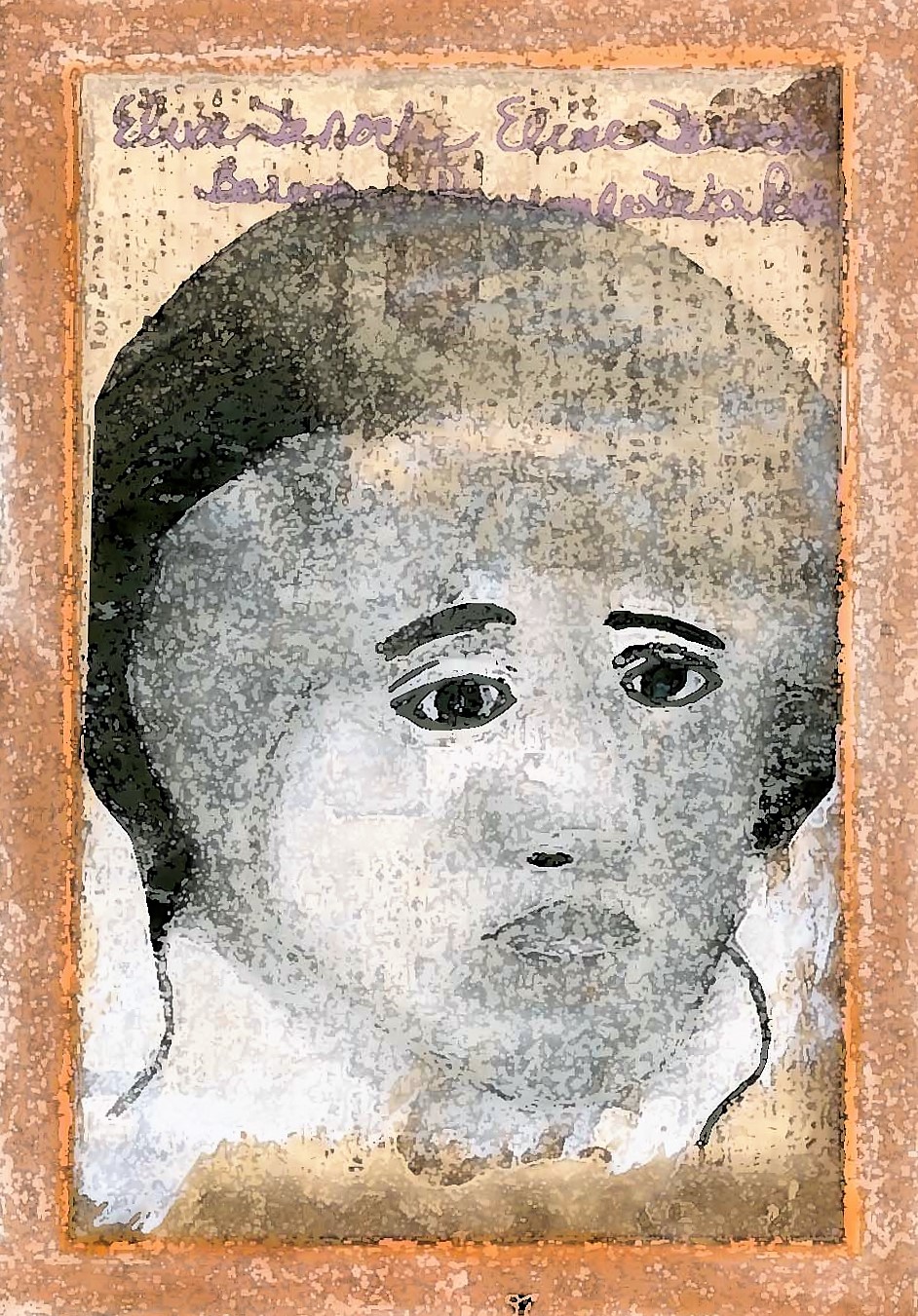
Original portrait of Elise Deroche,
mixed media, created for Leather, Lace,
Grit & Grace.
By the turn of the 20th century, in the wake of the height of the Industrial Revolution, European and American inventors began focusing on air travel, while at the same time certain women found themselves able to escape traditional Victorian roles for females. Baroness Raymonde de Laroche, born Elise Deroche in Paris in 1886, embodied these two social phenomena in her dramatic aviation career.

A plumber’s daughter, Elise initially trained as a sculptor and artist and made a name for herself in French theater. She also gave birth to a son in 1903; the father is unknown. The theater, however, was not what captured Elise’s imagination and sense of adventure. She embraced the velocipede (the forerunner of modern bicycles, popular in France and elsewhere since the late 1860s) and then turned to hot-air balloons. Loving the feeling of flying above the ground, she became an accomplished balloonist at a time when female balloonists were a rarity.

Elise’s first exposure to winged flight came in 1908 when Wilbur Wright gave some flight demonstrations in Paris. These presentations clearly planted a seed: a year later, famed aviator and airplane designer Charles Voisin suggested during a dinner date that she take flight lessons. Harry Harper, one of the earliest aviation journalists, overheard that portion of the dinner conversation, which went something like this:

Baroness Laroche: “I’ve painted portraits, done sculptures, been on stage, driven racing cars, and made flights in balloons. What more can a girl do?”

Charles Voisin: “How would you like to do something no woman has done before?”

Baroness Laroche:” Nothing would appeal more, my dear Charles. What is it?”

Charles Voisin: “Why not be the first woman in the world to learn to fly an aeroplane?”

A few days later, after toasting to her new ambition during the dinner date, de Laroche drove her own car to the Voisin brothers’ airfield at Chalons and instructed Charles to “Get out one of those Voisins of yours.” She talked down his objection (“It’s no use you’re having second thoughts. You promised.”)


Elise’s license from the 
Fédération Aéronautique Internationale, 
flying sweater. It was the jumping off point
for my Aviatrix Pullover design. 
Voisin's plane, like others of that era, was a fragile single-seat affair made with little more than wooden slats, wire, and canvas. Voisin, as flight instructor, stood outside of the plane when Elise took the driver's seat. At one point in their lessons, Charles told Elise to taxi down the airfield, which she did perfectly; a waiting mechanic turned the plane around and she taxied back. Voisin then instructed her to do it again, but not to leave the ground. Elise paid no attention. She opened the throttle and rose about 15 feet in the air, flying a distance of 300 meters. She was airborne - Elise said yes to the lessons, to flying, and to the love affair that developed between her and Charles. On March 8, 1910, less than two years after getting her first taste of flight during that Wilbur Wright demonstration, the Fédération Aéronautique Internationale (FAI) awarded Droche license number 36, calling her "Mme. de Laroche" - the first aviator's license earned by a woman.

The Baroness in the cockpit. Photo: National Air &
Space Museum Archives, Smithsonian Institution.
While France seemed relatively friendly to women pilots when compared to attitudes and conditions in other countries, Elise also had two advantages in her quest to fly—her lover Voisin offered flying lessons, and some French flight schools permitted female students. European society generally (as well as other societies) frowned upon female pilots and few male instructors were willing to teach women, making Elise’s advantages all the more important. Additionally, those women who were accepted as students still faced obstacles in France: notably that some schools would only accept women after the female student signed a document waiving all instructor liability in case of accident or death. Once accepted, some women then traveled long distances (in certain instances, many miles on foot) to and from out-of-the-way venues for their lessons. Although Flight’s October 1909 news story complimented Elise’s ability, it opened with a complaint that perfectly captured these attitudes: “Yet another sphere which some had thought man would, for some time, at any rate, retain for his own has been invaded by the gentler sex.”

Despite the prevailing cultural attitudes of the time, many women traveled to France at the turn of the century, taking flying lessons and earning the all-important FAI license (the FAI still issues licenses today). Their American numbers included Bessie Coleman, the first African American of either sex to earn a pilot's license.


Cracked Glass Cowl from Leather,
Lace, Grit & Grace.
France also took the lead in promoting aviation generally. In 1909 (just as Elise was learning to fly), aviators gathered for the first-ever international public flying event, the Grande Semaine d’Aviation de la Champagne in Reims. For a week in the sweltering French August heat, nearly all the prominent male pilots of the time competed in various distance and time events before crowds totaling half a million people. Corporate sponsors included several local champagne makers; they offered prize money totally more than 175,000 francs (more than $750,000) for the winners of these events. The excellent attendance numbers and enthusiastic sponsorship made it clear that aviation was becoming a popular spectator sport. Additionally, since these meets also became the venue in which male pilots, mechanics, designers, and builders tested their aircraft in a spirit of camaraderie, it also became an excellent testing ground and established the viability of flight as future potential transport.

Just four months after Elise received her FAI license (and competed pre-licensure in the Heliopolis meet in Cairo in February, 1910, in which she was one of three pilots - and the only woman in the entire field of participants - to win prize money flying a Voisin Antoinette 50 ch.), the second Grande Semaine d’Aviation took place in July, 1910, again in Reims, France. Of course the Baroness flew a Voisin biplane in several events. Prize monies had increased to 250,000 francs, and the number of participating pilots had doubled.

My modern take on Elise's flying
pullover, worked up in bulky weight
superwash wool. Nothing she wore
would have spared her injury during
the second Grand Semaine meet in
Reims in 1910.
At this meet, pilots made gains in distances and heights flown, yet it was marred by tragedy. On opening day, a male pilot was killed when the wings of his plane collapsed during a steep nosedive. On day six, de Laroche’s plane crashed after hitting the turbulence of the plane in front of her, and she was seriously injured. She was knocked unconscious, with eighteen fractures in hands, wrists, legs, and pelvis, plus wounds to her face. Her injuries were so severe, the Los Angeles Herald ran an erroneous story of her death on July 9, 1910, noting it was the “second fatal accident at [the Reims] meet.” Fortunately journalist Harry Harper attended the event to set the record straight.  He reported that de Laroche regained consciousness for a few brief minutes at the aerodrome’s hospital, enough time for her to relate to medical officials that she believed one of her fellow male competitors flew too close to her and caused the accident. Despite the extent of her injuries, the Baroness still managed to win 5,000 francs.

Critics of the event, as you may expect, publicly argued that flying was no place for women who could not handle the emergencies they could potentially face in the cockpit. Only men were capable of handling airplanes; it was unladylike for women to fly, and so on (despite the fact that the only fatality during the second Grande Semaine d’Aviation involved a male pilot). While her comments immediately after the crash led to one of her competitors being investigated and eventually cleared of any wrongdoing, not for a minute did de Laroche question her own competence as a pilot.

Stay tuned for the second part of the article to see just how it all worked out for the Baroness.

Friday, October 6, 2017

Receiving a Little Piece of History

A copy of correspondence in de Laroche's own
handwriting circa November, 1912, along with
the beginnings of the front of my own Aviatrix
Pullover, my design included with the article
about the Baroness in the 2017 issue
of Knitting Traditions Magazine.
Yesterday was a good mail day. As you may (or may not!) know, I authored an article in the recent Knitting Traditions Magazine about the first lady of licensed flight, Raymonde de Laroche. This in-depth piece is an extension of my overview of her story in the self-published book, Leather, Lace, Grit & Grace. 

The process of writing the Knitting Traditions article was a real treat, as it allowed me to dig deeper into the Baroness's story. I wanted, however, to unearth bits of history in her own voice which, almost two centuries after her death, with an ocean separating me from much of the scant source material, made that somewhat of a challenge.

Nevertheless, I managed to uncover articles not found in my original research for the book, and I continue to receive copies of research materials from sources not local to me. Much of those research results can be read in today's blog entry over at the Interweave Knitting blog entitled "Take Flight with Baroness Elise Raymonde de Laroche and Knitting Traditions."

However, yesterday's mail packet from The Smithsonian National Air and Space Museum was a real gem, as it contained a copy of the Baroness's own correspondence from a Reims hotel dated November 19, 1912. Not incredibly long, yet in it she wrote of her eye on the Coupe Femina as a distraction from her sadness at the death of Charles Voisin. The Baroness would win the coveted European racing competition the very next year. Seeing her handwritten note, complete with signature, made her grief and flying focus all the more palpable.

I hope everyone will read the Interweave blog entry as well as the article in Knitting Traditions. Of course, making your own version of the pullover would be great, too, during Slow Fashion October. Just sayin'.