Showing posts with label Cracked Glass Cowl. Show all posts

Wednesday, October 3, 2018

It’s Slow Fashion October!


So close to being done ... for
such a long time!
Hurrah – something to feel good about – it is once again Slow Fashion October.  While I will be writing more about slow fashion in my upcoming newsletter (which will go out a little later this week, so feel free to subscribe to it if you want to read my thoughts, which won’t be published elsewhere), as well as for the weekly Slotober prompts, I wanted to kick off the month with a wee announcement as well as an article.

Initially, the announcement: one of my goals during this year’s slow fashion month is to finish up a few WIPs I have lying around, begging to be completed, and since I so very much want to wear these projects, it fits in nicely with this year’s Slotober overarching theme. They are two sweaters (a pullover and a cardigan), and I am committed to seeing them completed. I am going to be hosting a MAL between October 8th and mid-November in my Ravelry group, and anyone with a WIP of one of my designs is highly encouraged to join me, so we can commiserate together and get the darn projects completed.

Additionally, since one of the WIPs I want to complete is my version of the Aviatrix Pullover, I thought I would start the month off by publishing – in two parts – a reworked and slightly expanded version of my article published in last year’s Knitting Traditions magazine that accompanied the Aviatrix Pullover design. Baroness Raymonde de La Roche, the first woman to receive a pilot’s license at the turn of the 20th century, is an amazing shero who has inspired a few of my designs. Equal parts moxie and determination, she is included in Leather, Lace, Grit & Grace and has an included crochet design dedicated to her glass ceiling-shattering life.  Without further ado, I hope you enjoy her story (and maybe she'll inspire you and your wardrobe choices):


Raymonde de LaRoche, the Baroness of Flight
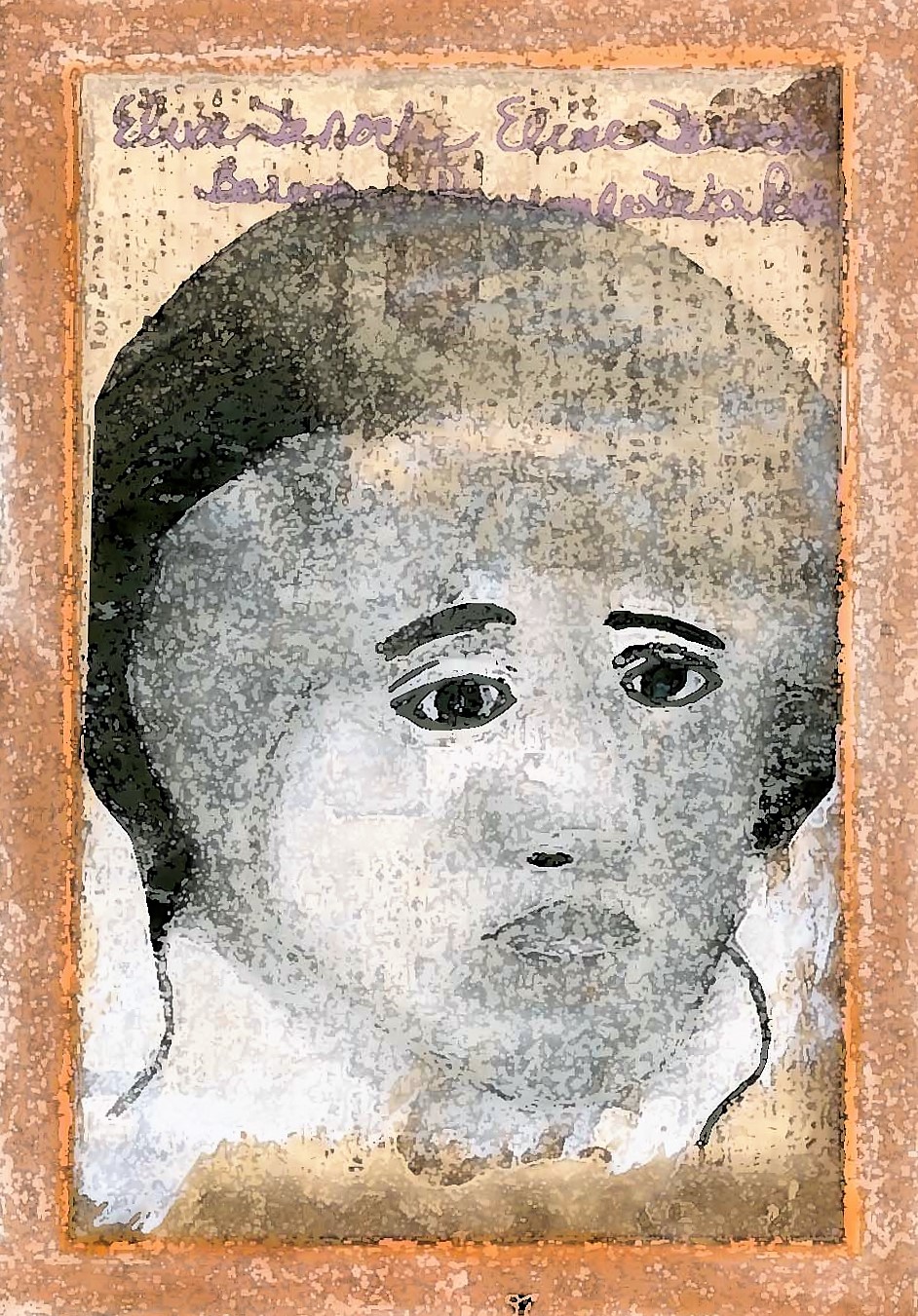
Original portrait of Elise Deroche,
mixed media, created for Leather, Lace,
Grit & Grace.
By the turn of the 20th century, in the wake of the height of the Industrial Revolution, European and American inventors began focusing on air travel, while at the same time certain women found themselves able to escape traditional Victorian roles for females. Baroness Raymonde de Laroche, born Elise Deroche in Paris in 1886, embodied these two social phenomena in her dramatic aviation career.

A plumber’s daughter, Elise initially trained as a sculptor and artist and made a name for herself in French theater. She also gave birth to a son in 1903; the father is unknown. The theater, however, was not what captured Elise’s imagination and sense of adventure. She embraced the velocipede (the forerunner of modern bicycles, popular in France and elsewhere since the late 1860s) and then turned to hot-air balloons. Loving the feeling of flying above the ground, she became an accomplished balloonist at a time when female balloonists were a rarity.

Elise’s first exposure to winged flight came in 1908 when Wilbur Wright gave some flight demonstrations in Paris. These presentations clearly planted a seed: a year later, famed aviator and airplane designer Charles Voisin suggested during a dinner date that she take flight lessons. Harry Harper, one of the earliest aviation journalists, overheard that portion of the dinner conversation, which went something like this:

Baroness Laroche: “I’ve painted portraits, done sculptures, been on stage, driven racing cars, and made flights in balloons. What more can a girl do?”

Charles Voisin: “How would you like to do something no woman has done before?”

Baroness Laroche:” Nothing would appeal more, my dear Charles. What is it?”

Charles Voisin: “Why not be the first woman in the world to learn to fly an aeroplane?”

A few days later, after toasting to her new ambition during the dinner date, de Laroche drove her own car to the Voisin brothers’ airfield at Chalons and instructed Charles to “Get out one of those Voisins of yours.” She talked down his objection (“It’s no use you’re having second thoughts. You promised.”)


Elise’s license from the 
Fédération Aéronautique Internationale, 
flying sweater. It was the jumping off point
for my Aviatrix Pullover design. 
Voisin's plane, like others of that era, was a fragile single-seat affair made with little more than wooden slats, wire, and canvas. Voisin, as flight instructor, stood outside of the plane when Elise took the driver's seat. At one point in their lessons, Charles told Elise to taxi down the airfield, which she did perfectly; a waiting mechanic turned the plane around and she taxied back. Voisin then instructed her to do it again, but not to leave the ground. Elise paid no attention. She opened the throttle and rose about 15 feet in the air, flying a distance of 300 meters. She was airborne - Elise said yes to the lessons, to flying, and to the love affair that developed between her and Charles. On March 8, 1910, less than two years after getting her first taste of flight during that Wilbur Wright demonstration, the Fédération Aéronautique Internationale (FAI) awarded Droche license number 36, calling her "Mme. de Laroche" - the first aviator's license earned by a woman.

The Baroness in the cockpit. Photo: National Air &
Space Museum Archives, Smithsonian Institution.
While France seemed relatively friendly to women pilots when compared to attitudes and conditions in other countries, Elise also had two advantages in her quest to fly—her lover Voisin offered flying lessons, and some French flight schools permitted female students. European society generally (as well as other societies) frowned upon female pilots and few male instructors were willing to teach women, making Elise’s advantages all the more important. Additionally, those women who were accepted as students still faced obstacles in France: notably that some schools would only accept women after the female student signed a document waiving all instructor liability in case of accident or death. Once accepted, some women then traveled long distances (in certain instances, many miles on foot) to and from out-of-the-way venues for their lessons. Although Flight’s October 1909 news story complimented Elise’s ability, it opened with a complaint that perfectly captured these attitudes: “Yet another sphere which some had thought man would, for some time, at any rate, retain for his own has been invaded by the gentler sex.”

Despite the prevailing cultural attitudes of the time, many women traveled to France at the turn of the century, taking flying lessons and earning the all-important FAI license (the FAI still issues licenses today). Their American numbers included Bessie Coleman, the first African American of either sex to earn a pilot's license.


Cracked Glass Cowl from Leather,
Lace, Grit & Grace.
France also took the lead in promoting aviation generally. In 1909 (just as Elise was learning to fly), aviators gathered for the first-ever international public flying event, the Grande Semaine d’Aviation de la Champagne in Reims. For a week in the sweltering French August heat, nearly all the prominent male pilots of the time competed in various distance and time events before crowds totaling half a million people. Corporate sponsors included several local champagne makers; they offered prize money totally more than 175,000 francs (more than $750,000) for the winners of these events. The excellent attendance numbers and enthusiastic sponsorship made it clear that aviation was becoming a popular spectator sport. Additionally, since these meets also became the venue in which male pilots, mechanics, designers, and builders tested their aircraft in a spirit of camaraderie, it also became an excellent testing ground and established the viability of flight as future potential transport.

Just four months after Elise received her FAI license (and competed pre-licensure in the Heliopolis meet in Cairo in February, 1910, in which she was one of three pilots - and the only woman in the entire field of participants - to win prize money flying a Voisin Antoinette 50 ch.), the second Grande Semaine d’Aviation took place in July, 1910, again in Reims, France. Of course the Baroness flew a Voisin biplane in several events. Prize monies had increased to 250,000 francs, and the number of participating pilots had doubled.

My modern take on Elise's flying
pullover, worked up in bulky weight
superwash wool. Nothing she wore
would have spared her injury during
the second Grand Semaine meet in
Reims in 1910.
At this meet, pilots made gains in distances and heights flown, yet it was marred by tragedy. On opening day, a male pilot was killed when the wings of his plane collapsed during a steep nosedive. On day six, de Laroche’s plane crashed after hitting the turbulence of the plane in front of her, and she was seriously injured. She was knocked unconscious, with eighteen fractures in hands, wrists, legs, and pelvis, plus wounds to her face. Her injuries were so severe, the Los Angeles Herald ran an erroneous story of her death on July 9, 1910, noting it was the “second fatal accident at [the Reims] meet.” Fortunately journalist Harry Harper attended the event to set the record straight.  He reported that de Laroche regained consciousness for a few brief minutes at the aerodrome’s hospital, enough time for her to relate to medical officials that she believed one of her fellow male competitors flew too close to her and caused the accident. Despite the extent of her injuries, the Baroness still managed to win 5,000 francs.

Critics of the event, as you may expect, publicly argued that flying was no place for women who could not handle the emergencies they could potentially face in the cockpit. Only men were capable of handling airplanes; it was unladylike for women to fly, and so on (despite the fact that the only fatality during the second Grande Semaine d’Aviation involved a male pilot). While her comments immediately after the crash led to one of her competitors being investigated and eventually cleared of any wrongdoing, not for a minute did de Laroche question her own competence as a pilot.

Stay tuned for the second part of the article to see just how it all worked out for the Baroness.

Friday, April 8, 2016

The Cowl-o-rama End is Near

Happy Friday everyone - I am pleased that we're coming to the end of Cowl-o-rama (this Sunday is the last day to post a photo of one's completed project), yet also just a little bit sad. I have come to realize just how much I love all aspects of cowls - designing them, making them, wearing them. As proof, here is my completed cowl, a tri-color version of the Cracked Glass Cowl.


I cannot tell you how much I love how this turned out! The color combination is awesome (if I do say so myself), and the lace edging and side inset, in Madelinetosh Tosh Light in the plaid blanket colorway, is simply amazing.
Get a load of the side
lace inset plaid blanket
colorway - just yummy
. 

One of the best parts of this project was plotting and planning the fiber colors I would use. There is no doubt that I love, love, love playing with color. Watching this come together in exactly the way I anticipated was a real pleasure. When worn, the side lace inset figures prominently, and the bottom edging falls perfectly. Additionally, I really like how blocking highlighted the crocheted edging attachment as a design element.


Can you tell I'm just a wee bit pleased with this finished project? These colors scream fall to me, but I might need to wear it before then!

I hope everyone else is pleased with their current fiber projects, and I'm now looking forward to announcing my next anniversary a-long, so stay tuned.


Sunday, March 27, 2016

A Design Anniversary March Nod

The current state of my tri-color Cracked Glass Cowl. I'm going to
finish that light green yarn at any moment, and have another green,
more olive in tone with a little bling, all ready and waiting to go.
 As March nears its close (resembling neither lion nor lamb), and as people start to finish projects in the current Cowl-o-rama a-long, I thought it appropriate in this design anniversary year to recognize the 5-year mark of my Ravelry group. 

I started it in March 2011, and it has been a small repository of my design evolution. It started out as a place where we read books together and swapped fiber and other stuff, but as my design career gained momentum, the focus changed. It has also slowly and organically grown (and I reached 200 members yesterday, an admittedly small, yet amazing milestone for me), which growth I am really pleased with. I am all kinds of humbled and grateful that other people want to follow my design progress as well as make one of my designs - definitely a pinch me moment.

There's still time to join us and make a quick spring cowl, since the a-long doesn't end till the 10th of April. Etched Ice and La Coeur Cowl have been the two popular designs so far, but I think we'll also see some tunisian crochet cowl design completions before it's all said and done.

Happy Easter to those who celebrate the holiday! Maybe instead of a new Easter bonnet, we should revise the tradition: a new Easter cowl. 

I like that.


Tuesday, May 26, 2015

A Little Color Adjustment

Hello everyone - I hope each of you had a great extended weekend! 

We are in the home stretch of my two-month-long Spring Flingy Thingy (it ends 5/31), so I am in the process of completing some projects and still working through others. 

As a result, I spent some of the long weekend doing some project color corrections. I am working on two cowls from Leather, Lace, Grit & Grace - a tri-color version of the Cracked Glass Cowl as well as a WASPs Cowl (which I blogged about here on Friday). Here were my original color choices for both cowls, respectively:

Greens for my tri-color
Cracked Glass Cowl

Initial blues and cream for
my WASPs Cowl
Looking good in theory, yes? So I tucked into the WASPs cowl yesterday and pretty quickly ran into a color snag. The mid blue-looking skein (it's really Teal shown here from the Wonder Why Alpaca Farm, LLC) in the middle was all wrong with the other blues. It was not playing so nicely; in fact, against the other blues it almost seemed to have a neon edge to it - definitely not what I had in mind for this cowl. Sooo, I ripped back and started to switch things around. I decided to break up all those cool blue tones and inject something with a warm undertone, as well as jettison (temporarily! this has a happy teal ending - just wait) the WWAF teal. Below is what I settled upon.
The cream skein in the background will remain for the cowl's edging. I swapped out the blue-green shire colorway (Madtosh Light) in the background of the before photo for the lighter gin blue Twisted Sisters yarn on the left in the after photo to the right, kept the Harrisville Design's deep blue and inserted a skein of Jamieson's of Shetland two-ply in the sand colorway which has just enough hint of peachy-pink to warm up the blues. As you'll see from the below photo, I think I made some excellent substitutions.
My WASPs Cowl - take two
I'm really liking how these three colorways are behaving together. That gin blue still has some pop to it, yet with the addition of the warm undertones of the Jamieson's the cowl will play nicely with my skintone. 

Now I still needed to deal with my small teal dilemma - I love the colorway and the yarn and wanted to use it in such a way to get the best out of it. I decided that if it didn't play nicely in the blue sandbox, maybe it would play better in the green one - and eureka! a greeny-blue star was born. Get a load of how I combined it in my tri-color Cracked Glass cowl.

My new, improved Cracked Glass palette

I swapped out the deeper green for the teal, and look how wonderfully it is getting along in its new home. I love, love, love this combination and cannot wait to complete a few other projects so I can resume working on it. There is nothing like a great (to me) color combination to get my project juices flowing.

Color only really comes to life when it's beside other color(s). I am so glad I adjusted the color palettes of both these projects. Now I need to hook like the wind so I can see how they turn out. 

Do take advantage of this last week in the Voie de Vie Spring Flingy Thingy and do something that will earn you an entry for the yarny prize draw at the end. Go here to check all the ways to play, including completing a project in our a-long. There's still time, everyone!