Showing posts with label Slow Fashion October. Show all posts

Sunday, October 6, 2019

Slow Fashion October - A Solo Road?

Autumn Rustle, the most recent design of mine
published in September as part of a KnitCrate Kit
(yarn included). The single pattern is also available
in my Ravelry design store.
Well, everyone, it is already the beginning of October! Can you believe it? The season for all things pumpkin spice is upon us once again ... and also one of my favorite months the last four years running because of Karen Templer and Slow Fashion October.

However, this October is different. Karen meant for 2018 to be her last year focusing on slow fashion in October only, and I must admit not only did I miss the allusion to it at the time, but also I am slightly bummed. I thoroughly enjoyed our month-long deep dive into all things hand made and slow ... and my wardrobe reflects that deep dive. I have been out of my normal environment every day for a service project since the beginning of September, and I have managed to wear a major piece of clothing (mostly sweaters and cowls) each day. While my wardrobe is still in flux - I want to, of course, knit and crochet more clothing for myself - it is starting to more accurately reflect my mindset and commitment to slow fashion. It is a value I feel strongly about, so the fact that my actions are in line with the value makes me feel all kinds of good. There is no doubt that Karen's (among many others) emphasis over the last four years really was instrumental in my clothing evolution, and for that I owe her a true debt as well as a heartfelt thank you.

This lace topper is just one of the designs that
will be tested commencing next week.
This October will be slightly different for me - my focus is squarely on my upcoming book publication, including testing the designs within the book. If you are interested in being a tester on what will likely be the Mother Of All Pattern Tests, do drop me an email or connect with me on Ravelry (Rav ID Deniseworld).

In the meantime, I hope you will take this time of new, crisp beginnings to deeply dive into your own wardrobe. Make a commitment to pay attention to how materials are sourced for the things you wear, as well as all appropriate appreciation given to the labor it took to make the garments. If you are so inclined, start small and make an accessory or two for yourself. Take chances and be bold. The satisfaction you will feel at truly taking control over how you present yourself to the world, and not just merely picking up something quick that will most likely be tossed into the landfill, will make you never look back.

Tuesday, October 16, 2018

Celebrating Slow Fashion October With My Autumn Capsule Collection

Slow Fashion October has become my clothing and wardrobe touchstone: it is the one month of the year that I take a really hard look at what I wear and the how concerning where I want to go from a clothing perspective.  The fact Fringe Association has gotten me into this mindset every year for the last four years is a testament in and of itself.

Of course, designing knit and crochet clothing and home fashions also has aided me in this total wardrobe transformation. There is nothing liking consistently creating fabric to not only hone one's skill in terms of fabric, but also what personally works ... and doesn't. What type of sleeve do I like best? V-neck or scoop? Dropped shoulder or set-in? How much, if any, ease? How many inches above the knee do I feel comfortable working this skirt hem? Back walking vent - yes or no? Do I keep a traditional line, or go for something more trendy? And, finally, how much effort do I actually want (or can afford to) expend on this one item? In a designing and making life, time is a much-fleeting yet ever important commodity (and I really do love sleep). I have, consistently over the last few years, continued to ask myself where and on what do I really want to spend my time? Of course, those last questions are, ultimately, questions of freedom, but on that digression I will remain silent.

So for this year's Slow Fashion October, I have finally timed it right to release a capsule collection - Five(ish) Easy Pieces. Two garments and four accessories all designed and created with elements I love in yarns that I can feel good about using. I wish to emphasize that not all of the yarn is from small, indie dyers. In fact, the bulk of them are from larger yarn manufacturers, because if my time and resources are limited, then I expect so too are they for many of the makers out there. Sometimes ease in sourcing materials and on one's budget are valid considerations - again, spending quality time and all that. I have never been a yarn snob and am not about to go that direction now. I do want to use the best fiber I can at all price points, so virtually all of the yarns (save one I believe) are all natural fibers. 

These designs will be introduced over my social media throughout the remainder of this week, as well as get put into the Ravelry database and listed in my various online sales platforms - Ravelry, LoveKnitting/Crochet, and (hopefully) Swatch Warriors, but that last one will take some time. I already have a few of these designs in the creation stage for my own wardrobe, which brings me all kinds of joy. It is exactly how I want to spend my time. So, without further ado, here is the look book for Five(ish) Easy Pieces:


Wednesday, October 3, 2018

It’s Slow Fashion October!


So close to being done ... for
such a long time!
Hurrah – something to feel good about – it is once again Slow Fashion October.  While I will be writing more about slow fashion in my upcoming newsletter (which will go out a little later this week, so feel free to subscribe to it if you want to read my thoughts, which won’t be published elsewhere), as well as for the weekly Slotober prompts, I wanted to kick off the month with a wee announcement as well as an article.

Initially, the announcement: one of my goals during this year’s slow fashion month is to finish up a few WIPs I have lying around, begging to be completed, and since I so very much want to wear these projects, it fits in nicely with this year’s Slotober overarching theme. They are two sweaters (a pullover and a cardigan), and I am committed to seeing them completed. I am going to be hosting a MAL between October 8th and mid-November in my Ravelry group, and anyone with a WIP of one of my designs is highly encouraged to join me, so we can commiserate together and get the darn projects completed.

Additionally, since one of the WIPs I want to complete is my version of the Aviatrix Pullover, I thought I would start the month off by publishing – in two parts – a reworked and slightly expanded version of my article published in last year’s Knitting Traditions magazine that accompanied the Aviatrix Pullover design. Baroness Raymonde de La Roche, the first woman to receive a pilot’s license at the turn of the 20th century, is an amazing shero who has inspired a few of my designs. Equal parts moxie and determination, she is included in Leather, Lace, Grit & Grace and has an included crochet design dedicated to her glass ceiling-shattering life.  Without further ado, I hope you enjoy her story (and maybe she'll inspire you and your wardrobe choices):


Raymonde de LaRoche, the Baroness of Flight

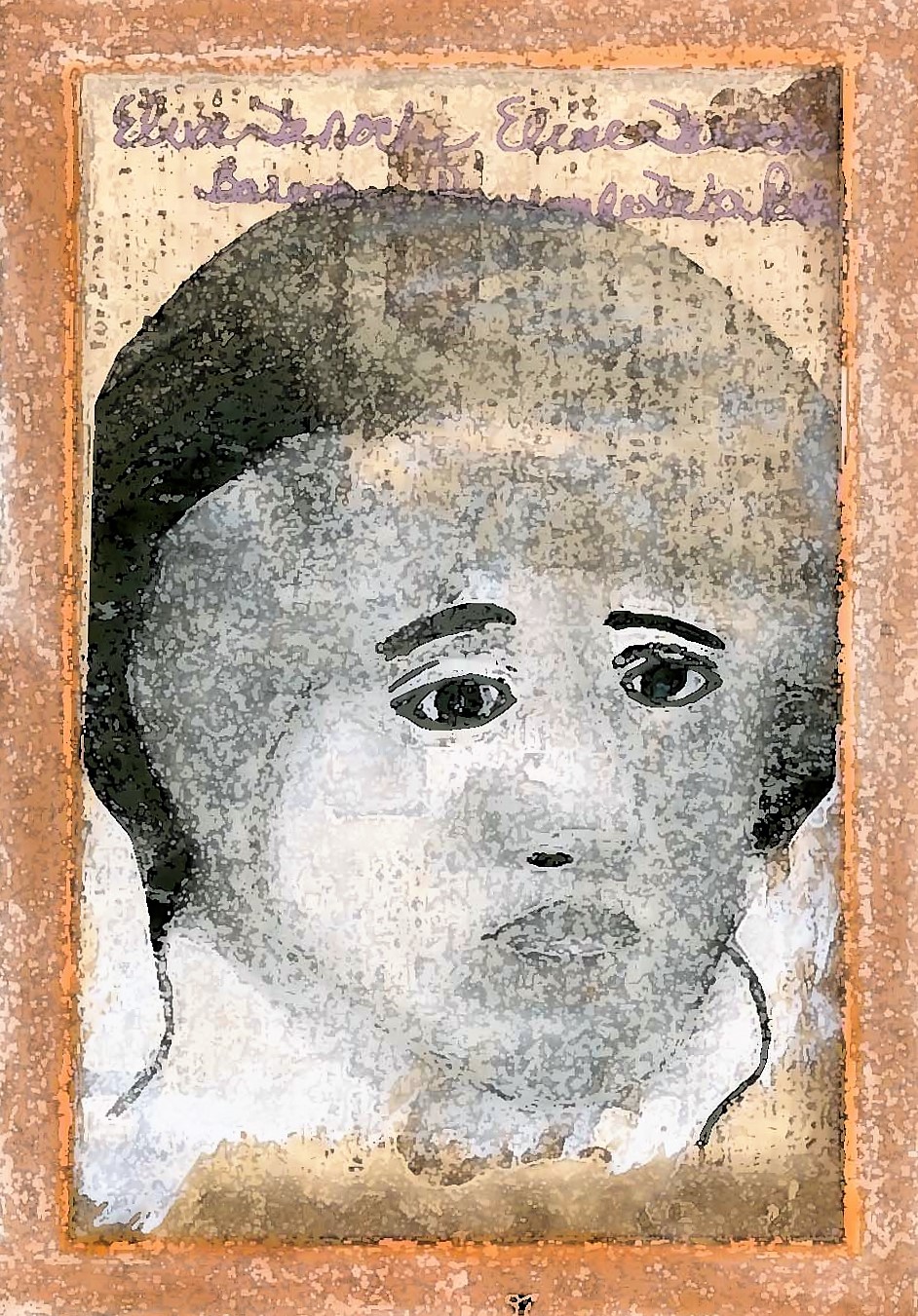
Original portrait of Elise Deroche,
mixed media, created for Leather, Lace,
Grit & Grace.
By the turn of the 20th century, in the wake of the height of the Industrial Revolution, European and American inventors began focusing on air travel, while at the same time certain women found themselves able to escape traditional Victorian roles for females. Baroness Raymonde de Laroche, born Elise Deroche in Paris in 1886, embodied these two social phenomena in her dramatic aviation career.

A plumber’s daughter, Elise initially trained as a sculptor and artist and made a name for herself in French theater. She also gave birth to a son in 1903; the father is unknown. The theater, however, was not what captured Elise’s imagination and sense of adventure. She embraced the velocipede (the forerunner of modern bicycles, popular in France and elsewhere since the late 1860s) and then turned to hot-air balloons. Loving the feeling of flying above the ground, she became an accomplished balloonist at a time when female balloonists were a rarity.

Elise’s first exposure to winged flight came in 1908 when Wilbur Wright gave some flight demonstrations in Paris. These presentations clearly planted a seed: a year later, famed aviator and airplane designer Charles Voisin suggested during a dinner date that she take flight lessons. Harry Harper, one of the earliest aviation journalists, overheard that portion of the dinner conversation, which went something like this:

Baroness Laroche: “I’ve painted portraits, done sculptures, been on stage, driven racing cars, and made flights in balloons. What more can a girl do?”

Charles Voisin: “How would you like to do something no woman has done before?”

Baroness Laroche:” Nothing would appeal more, my dear Charles. What is it?”

Charles Voisin: “Why not be the first woman in the world to learn to fly an aeroplane?”

A few days later, after toasting to her new ambition during the dinner date, de Laroche drove her own car to the Voisin brothers’ airfield at Chalons and instructed Charles to “Get out one of those Voisins of yours.” She talked down his objection (“It’s no use you’re having second thoughts. You promised.”)


Elise’s license from the 
Fédération Aéronautique Internationale, 
flying sweater. It was the jumping off point
for my Aviatrix Pullover design. 
Voisin's plane, like others of that era, was a fragile single-seat affair made with little more than wooden slats, wire, and canvas. Voisin, as flight instructor, stood outside of the plane when Elise took the driver's seat. At one point in their lessons, Charles told Elise to taxi down the airfield, which she did perfectly; a waiting mechanic turned the plane around and she taxied back. Voisin then instructed her to do it again, but not to leave the ground. Elise paid no attention. She opened the throttle and rose about 15 feet in the air, flying a distance of 300 meters. She was airborne - Elise said yes to the lessons, to flying, and to the love affair that developed between her and Charles. On March 8, 1910, less than two years after getting her first taste of flight during that Wilbur Wright demonstration, the Fédération Aéronautique Internationale (FAI) awarded Droche license number 36, calling her "Mme. de Laroche" - the first aviator's license earned by a woman.

The Baroness in the cockpit. Photo: National Air &
Space Museum Archives, Smithsonian Institution.
While France seemed relatively friendly to women pilots when compared to attitudes and conditions in other countries, Elise also had two advantages in her quest to fly—her lover Voisin offered flying lessons, and some French flight schools permitted female students. European society generally (as well as other societies) frowned upon female pilots and few male instructors were willing to teach women, making Elise’s advantages all the more important. Additionally, those women who were accepted as students still faced obstacles in France: notably that some schools would only accept women after the female student signed a document waiving all instructor liability in case of accident or death. Once accepted, some women then traveled long distances (in certain instances, many miles on foot) to and from out-of-the-way venues for their lessons. Although Flight’s October 1909 news story complimented Elise’s ability, it opened with a complaint that perfectly captured these attitudes: “Yet another sphere which some had thought man would, for some time, at any rate, retain for his own has been invaded by the gentler sex.”

Despite the prevailing cultural attitudes of the time, many women traveled to France at the turn of the century, taking flying lessons and earning the all-important FAI license (the FAI still issues licenses today). Their American numbers included Bessie Coleman, the first African American of either sex to earn a pilot's license.


Cracked Glass Cowl from Leather,
Lace, Grit & Grace.
France also took the lead in promoting aviation generally. In 1909 (just as Elise was learning to fly), aviators gathered for the first-ever international public flying event, the Grande Semaine d’Aviation de la Champagne in Reims. For a week in the sweltering French August heat, nearly all the prominent male pilots of the time competed in various distance and time events before crowds totaling half a million people. Corporate sponsors included several local champagne makers; they offered prize money totally more than 175,000 francs (more than $750,000) for the winners of these events. The excellent attendance numbers and enthusiastic sponsorship made it clear that aviation was becoming a popular spectator sport. Additionally, since these meets also became the venue in which male pilots, mechanics, designers, and builders tested their aircraft in a spirit of camaraderie, it also became an excellent testing ground and established the viability of flight as future potential transport.

Just four months after Elise received her FAI license (and competed pre-licensure in the Heliopolis meet in Cairo in February, 1910, in which she was one of three pilots - and the only woman in the entire field of participants - to win prize money flying a Voisin Antoinette 50 ch.), the second Grande Semaine d’Aviation took place in July, 1910, again in Reims, France. Of course the Baroness flew a Voisin biplane in several events. Prize monies had increased to 250,000 francs, and the number of participating pilots had doubled.

My modern take on Elise's flying
pullover, worked up in bulky weight
superwash wool. Nothing she wore
would have spared her injury during
the second Grand Semaine meet in
Reims in 1910.
At this meet, pilots made gains in distances and heights flown, yet it was marred by tragedy. On opening day, a male pilot was killed when the wings of his plane collapsed during a steep nosedive. On day six, de Laroche’s plane crashed after hitting the turbulence of the plane in front of her, and she was seriously injured. She was knocked unconscious, with eighteen fractures in hands, wrists, legs, and pelvis, plus wounds to her face. Her injuries were so severe, the Los Angeles Herald ran an erroneous story of her death on July 9, 1910, noting it was the “second fatal accident at [the Reims] meet.” Fortunately journalist Harry Harper attended the event to set the record straight.  He reported that de Laroche regained consciousness for a few brief minutes at the aerodrome’s hospital, enough time for her to relate to medical officials that she believed one of her fellow male competitors flew too close to her and caused the accident. Despite the extent of her injuries, the Baroness still managed to win 5,000 francs.

Critics of the event, as you may expect, publicly argued that flying was no place for women who could not handle the emergencies they could potentially face in the cockpit. Only men were capable of handling airplanes; it was unladylike for women to fly, and so on (despite the fact that the only fatality during the second Grande Semaine d’Aviation involved a male pilot). While her comments immediately after the crash led to one of her competitors being investigated and eventually cleared of any wrongdoing, not for a minute did de Laroche question her own competence as a pilot.

Stay tuned for the second part of the article to see just how it all worked out for the Baroness.

Tuesday, October 24, 2017

Slow Fashion October: Finally, Where Do We Feel Best


Initially, let me say that I cannot believe how fast Slow Fashion October has flown. It figures, of course.

This final time in the month is, traditionally, the time when we share resources. It is also, for me, the most dense amount of reading and link clicking and saving and information processing. One of the best resources on how to sort out ways to approach slow fashion in a meaningful way is this Racked article from August, compliments of the Elsewhere feature of this Fringe Association blog post. It was nice to read that beyond the obvious (buy less, recycle/upcycle more, DIY), it focused on industry standards and other environmental impacts (like using public transportation in both personal travel and shipping materials - a big issue with me, a confirmed public transportation user my entire life).

Moving on to the main attraction, however, is where I'm feeling best in sourcing my raw material - the all important yarn. I first did a similar round-up in 2015's Slow Fashion October, and the sometimes fleeting nature of yarn producers will show that some of those mentioned in the past are no longer yarn resources. If one likes to use small, independent yarn producers where the fiber can be sourced from animal to skein, then there's a likelihood of high turnover. Basically, if you like a source, speak up loudly and often so they stay around. Additionally, while Brooklyn Tweed has actually added new yarn lines since 2015 (a great thing!), I am getting, if truth be told, a little bored with the single color approach, as well as the designs. I hope Jared will shake things up in the house - perhaps a foray into crochet? Jared, I'm a stone's throw away. Just sayin'.

Left to right: A Hundred Ravens' Tyche base,
Neighborhood Fiber Co's Studio Chunky,
and Manos Del Uruguay's Silk Blend.
This year, while there is some overlap from 2015, you'll find at least one surprising choice, although I will explain all:

1. A Hundred Ravens - The first half of this past year, I curated/organized/birthed my first global design collection and related maker event (you can read more about it, as well as view the designs, here). That effort put me in contact with my first yarn resource. Female owned, awesome hand-dying, yarn bases made in the U.S.: this is a source that I can absolutely support - and so can a lot of other makers, apparently.

2. Neighborhood Fiber Co. - On my first resource list, Karida & company will remain on my list until the not-so-bitter end. She and I continue our symbiotic relationship with the publication of my Aviatrix Pullover in the 2017 edition of Knitting Traditions Magazine. 

3. Manos Del Uruguay - This non-profit, established to provide rural Uruguayan women with economic and social opportunities, has been producing wonderful yarn for the last over 4 decades. I am not certain why it didn't make my first list, but it's on there now.

Left to right: Garnstudio Drops Merino Extra Fine and
Belle, Lakeside-wolle's merino alpaca sock, and
Sidispinnt's 100% merino single.
4. Garnstudio Drops - This European-based yarn supplier has yarn lines made in the EU, Turkey, and South America (with additional mohair sourced from South Africa). It is high quality, amazingly priced yarn and, on its surface, a yarn source that seems out of place on my list. However, all of their yarn lines produced in the EU and Turkey (with the exception of the kid silk - that darn South African mohair!) are all OEKO-TEX certified. While the certification site is rather dense, basically there are three types of textile certification, and the mentioned Drops yarn lines fall into one of them (and the Drops site notes their OEKO-TEX certification numbers). The value of this yarn (which I've used for a long time), went way up.

5. Lakeside-wolle - This is another small, independent dyer I met during my earlier curated event. She has many wonderful OOAK colorways, and her small batch approach and great customer service made her yarns one of the summer event's favorites. Bonus points come from her ownership of an independent book store.   

6. Sidispinnt - This Swiss-based indie dyer/spinner/weaver is the third new-to-me source from my summer curated event. Not only did Sidi provide some of the deepest yarn support, her yarns were far and away the most popular on social media, selling out of the event's custom colorways almost immediately. She's highly creative and endlessly supportive of her fellow indie dyers. 

I can so easily not only feel good about sourcing yarns from any of the above, but my slow fashion path falls in nicely with each of their respective approaches to their craft. It is a great feeling - and one on which I will end my third Slow Fashion October.

Thanks once again, Karen, for wrangling all of us into a coherent month of awesome social awareness. Until next year ...


Tuesday, October 17, 2017

Slow Fashion October Week 3 - The How of it All

My Aviatrix Pullover: starting to look like
something vaguely resembling a sweater.
I am about to tuck into sleeve #2.
Here we are already in week 3 of this slow fashion month - which, to me, seems to be flying past us. This week we're focusing on the how of it all: in terms of skills, thrifting strategies, and wardrobe care, as well as how we carve time for the making.

I am going to start with the last of these things - the time. I make a lot. As I've stated, I enjoy it; nevertheless, I still make a lot. And because I am always in design mode, the making for myself is definitely relegated to last place. Not good, in my estimation. I will state, however, that Octobers and this month-long awareness campaign actually has made me focus and carve out time during this very month for, like, the last three years. That's a great thing, also in my estimation. Balance when estimating is a beautiful thing.


In the middle of all the making this month,
this also became a new design thing.


My wardrobe care is quite something else. I have had extenuating circumstances that has made my wardrobe care take on additional facets, in addition to the normal wear and tear mending. I really don't purchase that many pieces anymore, and now I find myself in need of several basics. For instance, I really only have two pairs of pants for winter, one of which is jeans. I need to rectify that. I also am in desperate need of foundation pieces, including cotton camis in all colors, as I wear them under everything. Because I am trying to source these pieces ethically, I really need to up my source knowledge, and because I have a lack of the aforementioned time, I find myself putting off the task. Then I place undo stress on those pieces I do have by, literally, wearing them into the ground. I have not yet found a happy balance between what I have and what I need because my wardrobe seems to be evolving right before my eyes. I just breathe deeply and take it one day, and piece, at a time.

As for my skills, I just do it. I make. I mend. I learn from the making and the mending. I did learn how to hand sew basic things (read: hems) when I was fairly young, and that knowledge has actually held me in good, albeit grudging, stead. I have a few well-worn knit and crochet technique books that fill in gaps and provide ideas on how I might approach making dilemmas. I don't thrift too much for myself - I have, however, taken to thrifting when styling designs for photography. This has actually turned into a fun activity, and then when the shoot is over, if models want the pieces I've thrifted, they are welcome to them. Everybody comes out ahead. I like that.


Wednesday, October 11, 2017

Wardrobe Wednesday - Second Slow Fashion October Edition

Happy (late) Wednesday, everyone! In keeping with my promise last Wednesday, here's my second outfit of the month that I have actually worn, utilizing parts of my handmade wardrobe.

In fact, I would go so far as to say that both items I made in this outfit are two that definitely fall into the "well worn" and "much loved" #slowfashion description categories. The cardigan is my version of the Nichols Cardigan from Leather, Lace, Grit & Grace; the cowl design is also from the same publication, the WASPs cowl. I have worn these two particular items a lot since I've made them. In fact, the cowl is the one that hangs right inside my front door, so it's my go-to cowl in most situations, and it is starting to show it around the edges. 

I am planning on making a second version of this cowl design for my own personal use, and I may make another of the cardigan. I wore this with a pale pink cami, and I actually would like another cardi in a different color so I can mix things up. This is a perfect time to invoke Sonya Philip's influence - while I am not necessarily looking for a uniform of sorts, if you look at her wardrobe photos, you'll see that she's made the same basic patterns (her own sewing patterns), over and over and over in multiple colors and textiles. She's found what works for her, it's definitely not boring (!), and she's sticking with it. I love these two pieces, they get worn ... so why not make a few more versions for myself? 


Sunday, October 8, 2017

The What of My Slow Fashion Closet

Welcome to week 2 of Slow Fashion October. Initially, let me provide a visual update on some of the projects I am working on during this month. You will see the completed back as well as the lower portion of the front of my own Aviatrix Pullover; the bottom right shows the shrug portion of my Quimby Hooded Cover-up. I am trying to complete both by the end of this week - we will see how far I get. 

I started this post with a projects update because it is directly relevant to this week's #slotober prompt: the what - specifically, what am I doing differently than I have in the past vis-a-vis my clothing, how has slow fashion impacted my closet, and what projects or individual pieces do I feel strongly about, and why. 

Initially, because I am also a designer, slow fashion has had an impact on what I design. I have been having this very conversation with a few of my fellow designers on social media for a while now - I have become rather picky in terms of what calls I respond to. Some aspect of the call itself needs to speak to me in order for me to put together a submission. I am also being very particular with those designs I self-publish - no more designing just for the sake of it. 

However, I do want to make clear that aesthetics can be a high motivator for me. Function is important, but I view fashion and home design within an artistic framework - so if a design idea really speaks to me along aesthetic lines, it might very well get made, irrespective of whether it is the uptheenth bag in my accessories repertoire. It is, for me, always balanced by the fact that I will never make a sock, so at least I know which rabbit holes I can easily and successfully avoid.

What is animating my personal making, as well as my closet, leads me back to my opening update. When I first started making things in earnest back in mid-2009 (when I joined Ravelry), it was all shawls all the time. I look back on that introduction to making fondly. I met many fellow shawl makers (some of whom are now my fellow designers), and I learned a lot about color, fiber, and finishing. But I am mostly (although not completely) over my shawl making phase. I am slowly but inexorably going down the sweater and skirt paths. I have not yet attempted a dress, but I am certain it is on the design and making horizon. As I am making more and more of my clothing that makes my everyday wardrobe rotation, this is a natural progression. This is also an area in which I still have a fair amount of curiosity - both with designs I may devise, as well as those of other designers. Heck, I have three + decades of Vogue Knitting designs to work through, my favorites of which inhabit a Ravelry working queue that will, quite literally, outlive me. However, each of the designs in my queue speaks to me (and trust me, that queue has gone through several rounds of editing over the last few years!), so making any amount of them would satisfy me on many levels. I am working on those designs for which I have yarn already put aside. That, along with my regular designing activities, will keep me busy for quite a while.

I design for myself, and hope that what animates me is also animating other publishers and makers. I take this approach for a particular reason - I am not willing to blindly feed the consumerism monster. I absolutely do not see my design activities as merely an extension or tool of those who need to sell magazines and yarn. Of course, I've written about this extensively with regards to advertising and content on this blog. I take a public broadcasting approach to advertising, and by extension, designing ... like Ken Burns' approach to documentary film making (in a far, far bush league sort of way). One can design and make with purpose, and still be prolific, but do so based on what deeply animates. That will necessarily mean that choices are limited and edited, but in the best possible way. 

However, once the editing occurs ... then all bets are off. If I want to make 5 of the same sweater in many colors, I will do so. 


Friday, October 6, 2017

Receiving a Little Piece of History

A copy of correspondence in de Laroche's own
handwriting circa November, 1912, along with
the beginnings of the front of my own Aviatrix
Pullover, my design included with the article
about the Baroness in the 2017 issue
of Knitting Traditions Magazine.
Yesterday was a good mail day. As you may (or may not!) know, I authored an article in the recent Knitting Traditions Magazine about the first lady of licensed flight, Raymonde de Laroche. This in-depth piece is an extension of my overview of her story in the self-published book, Leather, Lace, Grit & Grace. 

The process of writing the Knitting Traditions article was a real treat, as it allowed me to dig deeper into the Baroness's story. I wanted, however, to unearth bits of history in her own voice which, almost two centuries after her death, with an ocean separating me from much of the scant source material, made that somewhat of a challenge.

Nevertheless, I managed to uncover articles not found in my original research for the book, and I continue to receive copies of research materials from sources not local to me. Much of those research results can be read in today's blog entry over at the Interweave Knitting blog entitled "Take Flight with Baroness Elise Raymonde de Laroche and Knitting Traditions."

However, yesterday's mail packet from The Smithsonian National Air and Space Museum was a real gem, as it contained a copy of the Baroness's own correspondence from a Reims hotel dated November 19, 1912. Not incredibly long, yet in it she wrote of her eye on the Coupe Femina as a distraction from her sadness at the death of Charles Voisin. The Baroness would win the coveted European racing competition the very next year. Seeing her handwritten note, complete with signature, made her grief and flying focus all the more palpable.

I hope everyone will read the Interweave blog entry as well as the article in Knitting Traditions. Of course, making your own version of the pullover would be great, too, during Slow Fashion October. Just sayin'.


Wednesday, October 4, 2017

Wardrobe Wednesday - Slow Fashion Edition

On Monday, Karen Templer threw down her slow fashion wardrobe challenge for the month: 20 pieces yielding 30 outfits for October. As you'll see here, she's done a fantastic job with her 20 x 30. I, on the other hand, am taking a slightly different approach. In October, I plan to highlight outfits that I've actually worn utilizing handmade in the rotation. Since I plan on finishing up a bunch of projects this month, I think I may plan a 20 x 30 for November. Right now, all that wardrobe planning is a little too daunting.

However, I am pretty pleased to show off an outfit that I have actually, really, honest-to-goodness worn, since we are getting some cooler weather now interspersed with sun and 70s (it is turning into a really lovely autumn here in the Pacific Northwest). The cotton/linen striped sweater is this one from Vogue Knitting, circa 1987, that I completed this summer for a 35th anniversary challenge a bunch of us are participating in on Ravelry. Easy-peasy design and a great completed piece.The black velvet pants I have had forever, and the hem on both legs has been mended. The scarf is my crocheted Colorblocked Scarf I originally designed in 2014, and the necklace was a gift in a swap package from France. I wore a pale pink cami underneath, and I was mighty pleased with the comfort and ease of this outfit. 

This cotton/linen tee has already gotten good rotation with these pants, as well as with jeans and sandals.  I will probably make another next year, in different colors obviously, and probably a different size. 

Handmade love.

Sunday, October 1, 2017

Slow Fashion October: Take 3

Ladies and gentlemen, start your maker engines, because it is once again time for that month dedicated to all things wardrobe which are “small-batch, handmade, second-hand, well-loved, long-worn, and known-origins.” The brain behind Slow Fashion October is Karen Templer of Fringe Supply Co. and karentempler.com, and much thanks to her for once again spearheading this mammoth 31 day social media event.

I plan on posting blog entries throughout the entire month here on the blog, definitely in response to each weekly prompt, and perhaps beyond and/or ancillary to them. This initial week's prompt is the "who" - obvious and not so much. Obvious in the introducing of oneself; not so much in the who/what has influenced my personal clothing path.

To answer the obvious, I am a handknit- and crochet-wear designer. I’ve been at this now for six amazing years; I’ve self-published a first book of designs based on the early females of flight – Leather, Lace, Grit & Grace. I currently continue designing and publishing utilizing that same inspirational material with the Aviatrix Pullover (and an accompanying in-depth article on Raymonde de Laroche) in the current Knitting Traditions Magazine, as well as my own fall mini-remix of knit designs in the Flying Sticks remix e-book.

As anyone who has read this interview or this blog post (from last year's Slow Fashion October) or the acknowledgement to Leather, Lace, Grit & Grace knows, my initial wardrobe influencer was my maternal grandmother. Her clothes shopping trips, and their related purchase reveals to an audience of one (yours truly) when I was barely a tween, left an indelible mark in my fashion memory. The fact that she was a New England textile worker (which I learned only many years later) provides such context to those reveals, in which she would tell me the alterations she planned for each piece. My grandmother used her sewing machine regularly well into her mid-70s, and while I had no desire to use the sewing machine, her willingness to share what she had in mind absolutely had an impact on my approach to clothes and wardrobe.
Just a few of the many Vogue
Knitting editions in my
personal library

Of course, initially I had no desire to alter my off-the-rack purchases beyond a hemming here and there. However, handmade has had a long, slow simmer on my clothes’ making back burner, as well-thumbed and much traveled issues of Vogue Knitting, purchased when originally published over the almost last 30 years, can attest.


It wasn’t until the middle to late 2000s, coinciding with my time instructing ethics to design school students, that I started to really focus on handmade and DIY with some semblance of mindfulness. The back and forth with students really helped to bring my own thoughts into focus. It doesn’t hurt that I also have a fair amount of curiosity about how things work, some natural mechanical and spatial abilities, and a deep love of color. I am currently a huge follower of all things Sonya Philip. We may have very different styles, but the breadth and depth of her handmade wardrobe is so damn impressive, not to mention her awesome way with color and pattern. Katrina Rodabaugh and Tom Holland have made me reimagine mending across all the textiles of my world (and found via Slow Fashion October Take 1); designer Veronik Avery remains a design and pattern grading inspiration. Oh, and let me not forget Norah Gaughan - because in addition to the designs, she's an amazing human being.

I do have wardrobe goals for the month, and they feature me actually completing several handmade pieces, a few of which are part of my Ravelry group’s maker event which started in September and ends mid-October. I have two pullovers, a cardigan, and a cover-up in various stages of completion that, if I can manage to get them off my making plate, are perfect fall weather wearables. I also have a few long-overdue model thank-you’s to complete; my regularly scheduled original design life continues behind the scenes.

It’s a good thing I like this hand-making stuff.


Saturday, October 15, 2016

Long-Worn (and Used) Meets Handmade

Nichols Cardigan in NFC's
Studio Worsted
For those who love all things fiber, this is the weekend of the fall season - The New York Sheep and Wool Festival, otherwise known as Rhinebeck (where it's held)  - is happening. For many knitters and crocheters, it's an annual event. For others (like moi), we aspire to make it to Mecca one of these years very soon.

While I personally will not be in attendance, I am happy to report a few of my designs will be courtesy of Neighborhood Fiber Co. If you are anywhere near Rhinebeck Building C, booth 40 this weekend, not only will you get to pet some awesomely hand-dyed fiber, but you can also check out my Nichols Cardigan as well as the Lace Decadence Shawl.

Of some note, this year New York Sheep and Wool is hosting a used equipment auction in addition to a wool sweater upcycling class for kids (old wool sweaters are felted and then used by kids to craft plushies and other things). I have found the knit and crochet community to be extremely good about recycling, upcycling, mending, and just generally squeezing every ounce of wear out of their respective handmade (and commercially purchased) items. 

For me personally, it's been a more mixed bag in this regard. Growing up, we didn't get many new wardrobe items, but we absolutely adhered to the hand-me-down and mended theory of wardrobe management. Of course, through middle school that also made me an instant stand-out in the poor/working-class person's fashion parade, which was not the superlative to which I aspired. Once I hit high school and started making my own money, I cheerfully waived good-bye to hand-me-downs and ditched my meager mending kit. I cheerfully (and fairly mindlessly) breezed my way through the next few decades purchasing what I wanted, whenever I wanted as my budget allowed. 


Lace Decadence Shawl worked up in NFC's
Rustic Fingering Gradient Kit in Shades of Umber
It was not until the last decade or so that I have started to be more mindful of clothing - and designing for myself the last five years has shifted my mindful wardrobe gear into overdrive. It has not ever been a question of knowing the simple monetary value of my wardrobe - I have always paid for my own clothing - but gaining insight into and valuing all the other aspects of clothing has opened my eyes. From design, to materials, to production (including the all-important labor), waste management, and then upkeep - I have experienced nothing short of a slow fashion conversion. If I can crochet or knit it, I will (and no, there is NO sewing machine in my future). I have not made any real ready-wear clothing purchases in the last oh, at least, three years. Since I have no jeans (really, not one pair), I will need to make a few well-placed buys very soon, and they will be new, as opposed to used. I have no per se issue with used clothing - for others. Admittedly, this former hand-me-down kid will almost always choose new or handmade. I am not the vintage or used pied piper - every person is entitled to source their wardrobe in their own way based on their own rationale. Clothing is just too personal to expect anything less.

Despite my thin wardrobe depth, I am not-so-secretly jealous of those with wardrobe depth that demand a separate room in the house. One, to me, that seems to demand just such a room has to be Sonya Phillip of 100 Acts of Sewing. Her wardrobe, as well as her energy to sew, knit and otherwise create it, seems to be boundless. I may not want to sew, but I do covet Sonya's daily wardrobe choice possibilities.

All this gets me to my final point - I am not certain, if one is being mindful, that there is such a thing as "too much" in the context of a handmade wardrobe. Similar to thoughts expressed in Sonya's project statement, if one is fully conversant with the process of personal clothes making, and actively engages in that process, then what they produce is perfect for them. The last thing the DIY community needs is the consumption or politically correct police. Anyone with nominally imaginative powers can see exactly where that well-intentioned path will lead. If a person wants 10 skirts in 10 different colors, and is mindful about sourcing and acquiring said 10 skirts, then more power to him/her. Personally, I'm working on New Wave Skirt #2 for myself - and if I want 8 more, I will darn well make them.

Enough from me on this for now

Saturday, October 1, 2016

It's Time for Slow Fashion October - Take 2

I am so excited about the second year of Slow Fashion October! Fringe Supply Co., the mastermind behind organizing around this concept, has provided all of us with a month's worth of weekly prompts to get us thinking and writing about this free-wheeling (and sometimes unwieldy) concept.

So who am I, how do I come to this concept, and how does it impact my making and my closet? As a designer (knit- and crochet-wear) and maker, I have a fine appreciation for small-batch and handmade. To be honest, I have not always had such an appreciation. As someone from modest, blue collar roots who has actually worked in a mill (I made men's shoes for a summer), I wanted education so I could escape such sweaty, oppressive work. My grandmother was a textile worker and an avid sewer well into her elder years, and I wanted nothing to do with sewing (and you can read more about my anti-sewer stance as well as other fashion beginnings from last year's Slow Fashion October blog entries).

Nevertheless, I have always loved clothes (some things from my grandmother rubbed off on me), as well as crochet and hand-knit (and interior design, which I consider an extension of all this). It has been a long, strange trip to get to this place - complete with oodles of education - but designing and making, both for myself as well as my living space seems second nature to me now. The "small-batch, hand made ... well-loved [and] long-worn" part of this celebration fits me perfectly. Environmental, humanitarian, and budgetary concerns all definitely have played a role in getting me to think more deeply about all of this (helped along by a major portion of that education spoken of earlier), but there's an uneasy intersection between these first three influences (which can have a real dilettante quality to them) and that poor and struggling shoe-factory-working girl who wanted something better for herself. I will always have much respect for working-class values which, if a working-class person is being honest, s/he longs to escape. Please have others make things for me. Why should I mend my clothes - I want the resources to just buy something shiny and brand new. It is only with time, self-knowledge and reflection that one can make peace with and find balance among these clashing values. It also, in many instances, means walking a solitary path, so getting in on this month-long social discussion is a really welcomed gift.

Since Slow Fashion October coincides with a two-month Wardrobe Weather a-long I am hosting in my Ravelry group, I will definitely be making things this month. I am almost done with another New Wave Skirt for myself, I have (shown above) swatched for a Bomber-inspired Hoodie Vest and I am just tucking into a green/cream/taupe version of my Mixlace Poncho. Admittedly, budget and easily accessible materials have dictated my yarn choices for these projects (including using my own stash). I am looking forward to adding them to my wardrobe and showing them off.

A certain balance achieved.